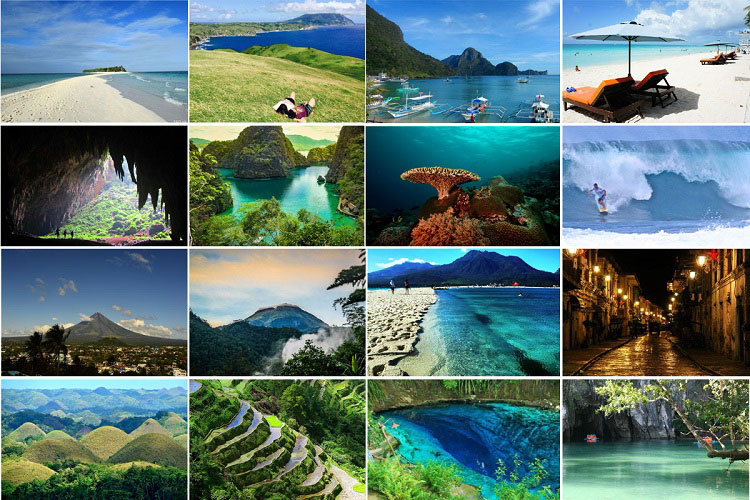
[ˌpɪlɪˈpinɐs] or Filipinas
[ˌfɪlɪˈpinɐs]), officially the Republic of the Philippines (Filipino: Republika ng Pilipinas),[a] is an archipelagic country in Southeast Asia. Situated in the western Pacific Ocean, it consists of about 7,641 islands[22] that are broadly categorized under three main geographical divisions from north to south: Luzon,Visayas and Mindanao. The capital city of the Philippines is Manila and the most populous city is Quezon City, both part of Metro Manila.Bounded by the South China Sea on the west, the Philippine Sea on the east and the Celebes Sea on the southwest, the Philippines shares maritime borders with Taiwan to the north, Japan to the northeast, Vietnam to the west, Palau to the east, andMalaysia and Indonesia to the south.
The Philippines’ location on the Pacific Ring of Fire and close to the equator makes the Philippines prone to earthquakes and typhoons, but also endows it with abundant natural resources and some of the world’s greatest biodiversity. The Philippines is the world’s 5th largest island country with an area of 300,000 km2 (120,000 sq mi).[24][6][7] As of 2015, had a population of at least 100 million.[9] As of January 2018, it is the eighth-most populated country in Asia and the 12th most populated country in the world. Approximately 10 million additional Filipinos lived overseas,[25] comprising one of the world’s largest diasporas. Multiple ethnicities and cultures are found throughout the islands. In prehistoric times, Negritos were some of the archipelago’s earliest inhabitants. They were followed by successive waves of Austronesian peoples.[26] Exchanges with Malay, Indian, Arab and Chinese nations occurred. Then, various competing maritime states were established under the rule of datus, rajahs, sultans and lakans.
The arrival of Ferdinand Magellan, a Portuguese explorer leading a fleet for the Spanish, in Homonhon, Eastern Samar in 1521 marked the beginning of Hispanic colonization. In 1543, Spanish explorer Ruy López de Villalobos named the archipelago Las Islas Filipinas in honor of Philip II of Spain. With the arrival of Miguel López de Legazpi from Mexico City, in 1565, the first Hispanic settlement in the archipelago was established. The Philippines became part of the Spanish Empire for more than 300 years. This resulted in Catholicism becoming the dominant religion. During this time, Manila became the western hub of the trans-Pacific tradeconnecting Asia with Acapulco in the Americas using Manila galleons.[28]
As the 19th century gave way to the 20th, the Philippine Revolution quickly followed, which then spawned the short-lived First Philippine Republic, followed by the bloody Philippine–American War.[29] The war, as well as the ensuing cholera epidemic, resulted in the deaths of thousands of combatants as well as tens of thousands of civilians.[30][31][32][33] After the war, the United States retained sovereignty over the country until the Japanese invasion and subsequent occupation of the islands during World War II. Later in the war, it was liberated by the combined forces of Americans and Filipinos and by 1946, was recognized as an independent nation. Since then, the unitary sovereign state has often had a tumultuous experience with democracy, which included the overthrow of adictatorship by a non-violent revolution.
The Philippines is a founding member of the United Nations, World Trade Organization, Association of Southeast Asian Nations, theAsia-Pacific Economic Cooperation forum, and the East Asia Summit. It also hosts the headquarters of the Asian Development Bank.The Philippines is considered to be an emerging market and a newly industrialized country,[36] which has an economy transitioning from being based on agriculture to one based more on services and manufacturing.[37] Along with East Timor, the Philippines is one of Southeast Asia’s predominantly Christian nations.
BORACAY
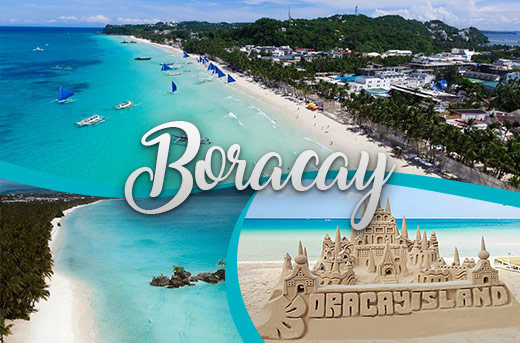
Boracay is a small island in the central Philippines. It’s known for its resorts and beaches. Along the west coast, White Beach is backed by palm trees, bars and restaurants. On the east coast, strong winds make Bulabog Beach a hub for water sports. Nearby, the observation deck on Mount Luho offers panoramic views over the island. Offshore, coral reefs and shipwrecks are home to diverse marine life.
VIGAN
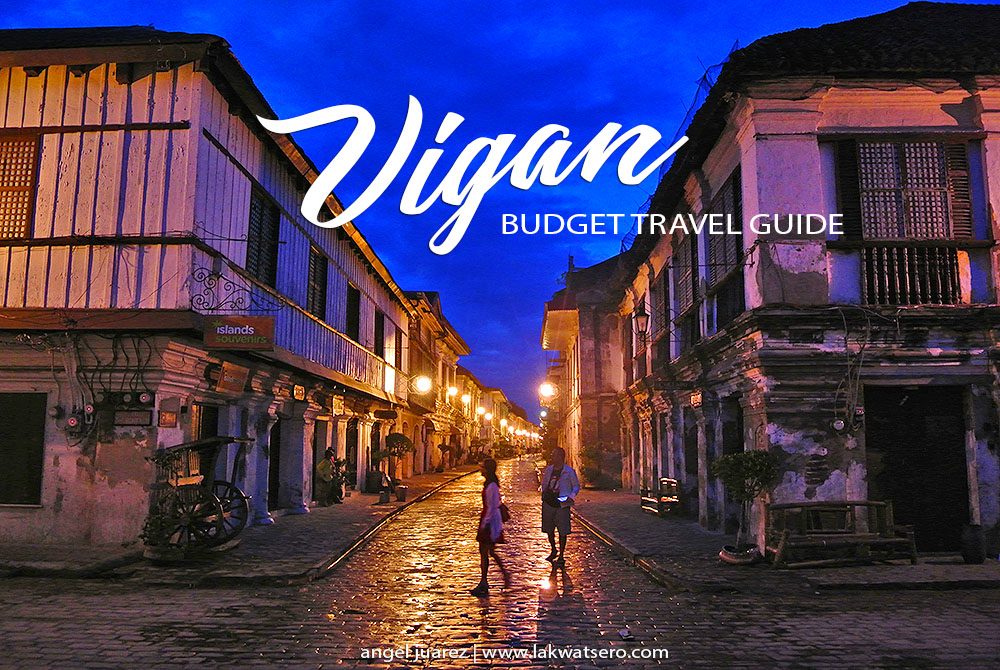
Vigan is a city in the Philippines, on the west coast of Luzon island. It’s known for its preserved Spanish colonial and Asian architecture. Calle Crisologo dominates the Mestizo district, with its cobblestone streets, malecón, horse-drawn carriages and rustic mansions. Near the white baroque Vigan Cathedral are Plaza Salcedo, offering fountain light shows, and Plaza Burgos, known for its street-food stalls.
RICE TERRACES
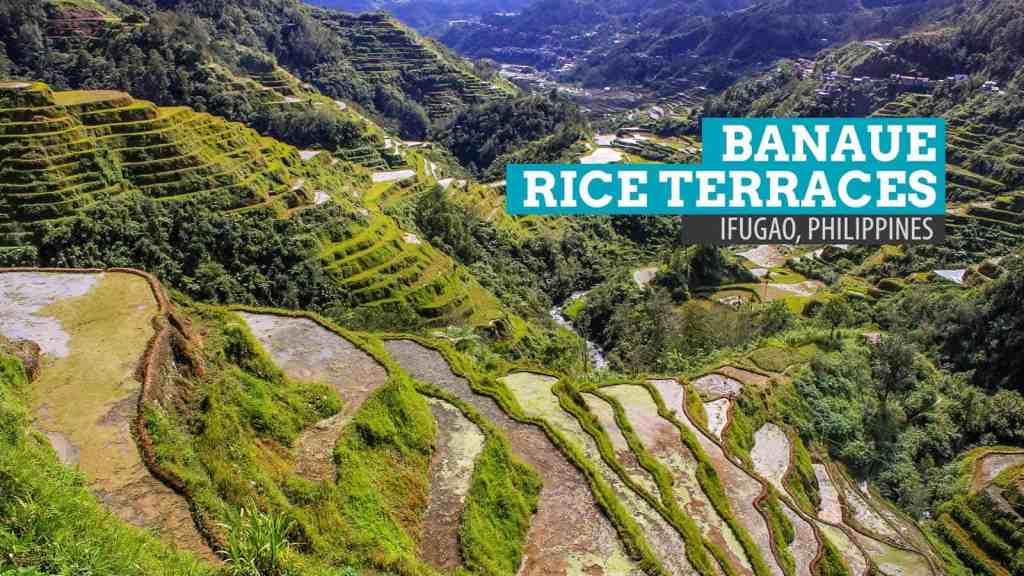
The Banaue Rice Terraces are terraces that were carved into the mountains of Ifugao in the Philippines by the ancestors of the indigenous people. The terraces are occasionally called the “Eighth Wonder of the World”. It is commonly thought that the terraces were built with minimal equipment, largely by hand.
About Us
The Philippines, officially the Republic of the Philippines, is an archipelagic country in Southeast Asia. Situated in the western Pacific Ocean, it consists of about 7,641 islands that are broadly categorized under three main geographical divisions from north to south: Luzon, Visayas and Mindanao.
Get In Touch
macariolasharmae06@gmail.com
 macariola blog